
Anyone who has visited Edinburgh can confirm that culture and sport are exceptionally well-developed in the city. It seems as though the local authorities and private sponsors have chosen these two spheres for maximum promotion and refinement. This is as it should be, as these are the very components responsible for nurturing the younger generation and discovering new talent. More at iedinburgh.
Within the realm of sport, football holds a special place. Edinburgh has been the birthplace of many famous players and is home to iconic clubs. One of the most prominent is Hibernian Football Club (hereafter Hibernian F.C., Hibs, or the Club). It has a fascinating past that has become a valuable part of Edinburgh’s overall football history.
The Story Begins
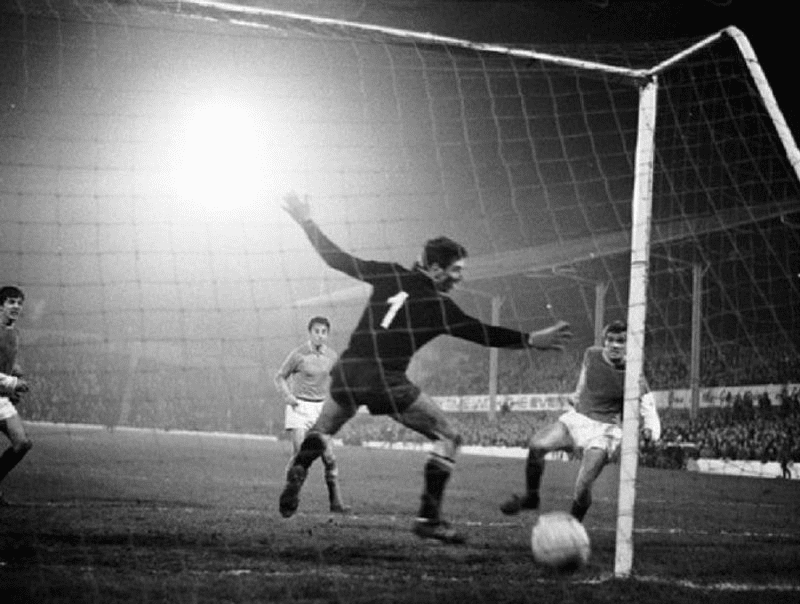
The Club was founded in 1875, with Irishmen living in the area of Edinburgh’s famous Cowgate street playing a huge role in its creation. The founders dedicated the name to their national symbolism, as the ancient name for Ireland is Hibernia.
By the 1880s, Hibernian F.C. had already established itself as a formidable team. The year 1887 marked the Club’s first major victory when it won the Scottish Cup. Following this, Hibs confidently defeated Preston North End, which cemented their champion status.
Early Difficulties
However, even the best of starts are rarely without complications. Hibernian F.C. encountered issues that led to a temporary halt in its activities, primarily caused by management problems, including uncertainties over the lease of their training ground.
Looking back, the Club views the period from 1875 to 1891 as a crucial phase of formation and development, considering all its achievements during this time to be valuable and important. When the dust settled and the problems were gradually resolved, the Club delighted its fans with new success. In 1902, Hibernian Football Club won the Scottish Cup once more. This was a truly grand event that returned the players to a leading position.
Unfortunately, this joy was followed by a period of stagnation. Hibs eventually lost their place in the league and were relegated from the top division.
Long-Awaited Success
Thankfully, periods of defeat are often followed by periods of happiness. Hibernian F.C. would eventually enjoy well-deserved success, but they had to wait a long time for it. The most successful era in the Club’s history is considered to be the period after the Second World War, when Hibs became known as one of Britain’s leading teams.
A huge part of this was down to the legendary “Famous Five” forward line, which consisted of Gordon Smith, Bobby Johnstone, Lawrie Reilly, Eddie Turnbull, and Willie Ormond. Their play was considered the gold standard of Scottish football, and each of them scored over 100 goals for the Club.
As the country recovered from the war and competitive matches returned, Hibernian F.C. reached the 1947 Scottish Cup final. The team went ahead during the match but ultimately lost, with the victory going to Aberdeen Football Club. Despite the death of manager Willie McCartney in the winter of 1948, the Club went on to win the Scottish league championship for the first time since 1903.
The Pioneers of Europe
The years 1950-1951 are considered the peak of the Famous Five’s career. Thanks to these players, the Club reached The 1950 Scottish League Cup final but were defeated by Motherwell Football Club. Although Hibs only finished fifth in the league in 1955, they were invited to participate in the inaugural season of The UEFA Champions League (then the European Cup).
This event was hugely significant, as Hibs became the first British club to compete in Europe, after the English champions, Chelsea Football Club, declined to enter. In their first match, Hibs faced Rot-Weiss Essen and won on the pitch of the Georg-Melches-Stadion. The Club also defeated Djurgårdens IF, a victory that put them on the path to the semi-finals. Unfortunately, their journey was cut short by a defeat to Stade de Reims.
A New Level

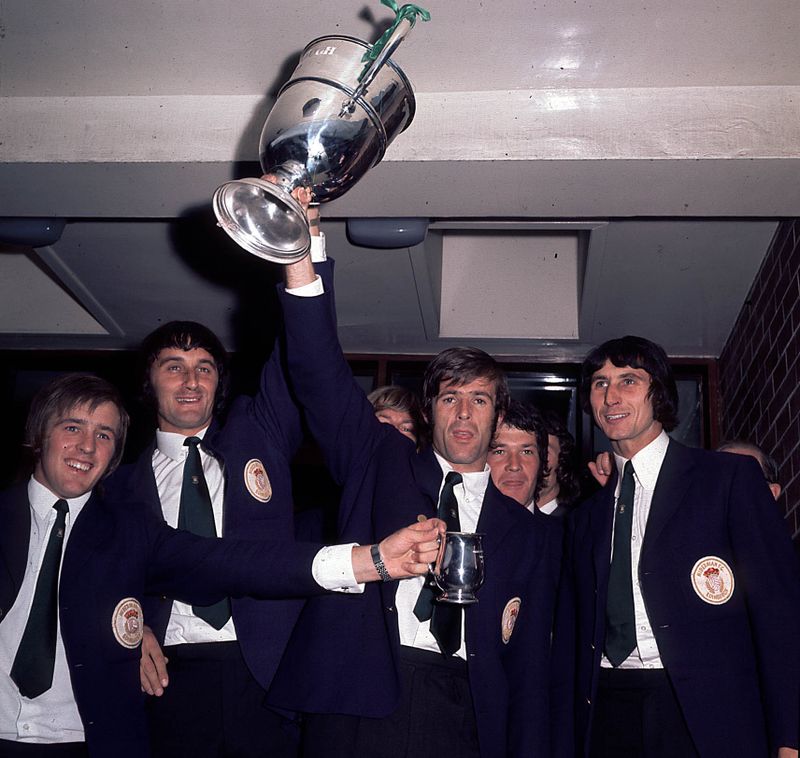
The 1960s began, and during this period, Hibs showed decent results, though they could not be described as spectacular. This continued until 1971, when former player Eddie Turnbull took over as manager. This appointment led to the emergence of the team known as “Turnbull’s Tornadoes”. In 1972, they won The Scottish League Cup, and in 1974 and 1975, they finished second in the league.
Under Eddie’s leadership, the team also won The Drybrough Cup in 1972 and 1973. On 1st January 1973, they triumphantly defeated Heart of Midlothian Football Club 7-0. However, this successful spell was soon followed by a series of setbacks, chief among them being Turnbull’s departure as manager. The Club was subsequently relegated from the top league in 1980.
On the Brink of Closure
Time passed, but the situation at Hibs did not improve. Things were so difficult that in 1990, the Club was on the verge of bankruptcy. A strange proposal came from the board of Heart of Midlothian Football Club to merge the two clubs. Of course, Hibernian F.C. did not agree, viewing the initiative as a hostile takeover attempt.
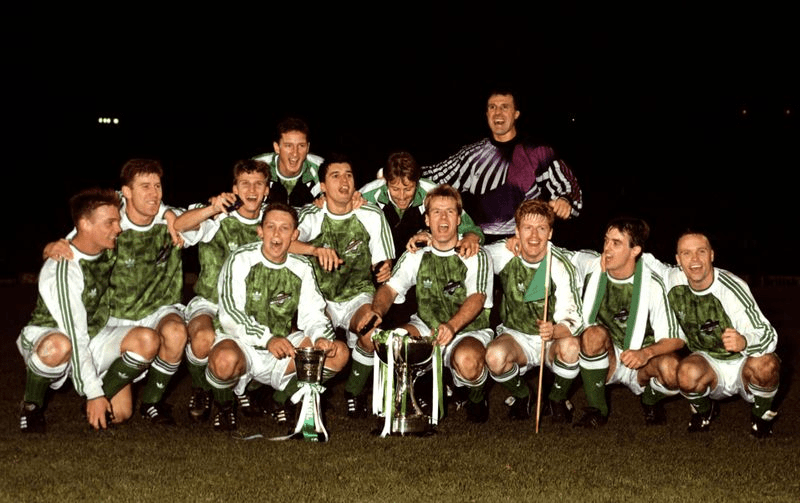
When things seemed most dire, a miracle occurred. The renowned businessman Sir Tom Farmer acquired a controlling stake in Hibs. He can be considered the saviour of his beloved team. The Club began to show good results again, notably winning the 1991 Scottish League Cup Final. Between 1993 and 1995, the Club consistently finished in the top five of the league.
Managerial Turmoil
The 2000/01 season was quite successful for Hibernian Football Club. The Club finished third in the league and reached the 2001 Scottish Cup final, though they failed to win it. The 2000s were marked by frequent changes of manager. It all began when Alex McLeish left the post in 2001. Franck Sauzée took his place, but his lack of coaching experience was a hindrance. Soon, he was replaced by Bobby Williamson, who, in turn, handed the post to Tony Mowbray.
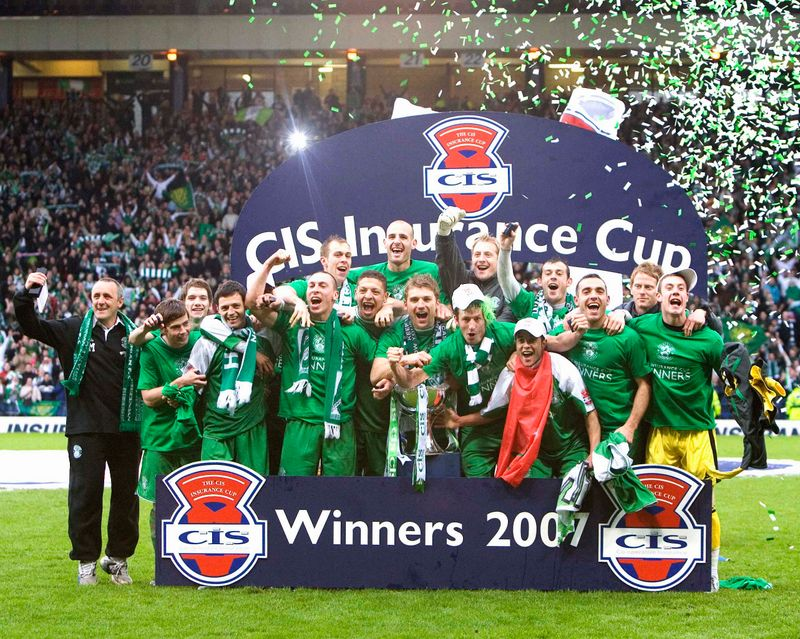
However, the 2000s are also remembered for the emergence of a new “golden generation” of players, including Garry O’Connor, Derek Riordan, Kevin Thomson, and Scott Brown. Thanks to them, the Club began to showcase its potential more brightly. After Mowbray, former player John Collins became the team’s manager, and he led the Club to victory in the 2007 Scottish League Cup final.
An Unstable Era
From 2010, another period of frequent managerial changes began. In between these changes, the team reached the 2012 Scottish Cup final but unfortunately lost. A similar situation occurred in 2013. Furthermore, Hibs suffered a heavy defeat after qualifying for The 2013-14 UEFA Europa League. In other words, the instability in the manager’s office was not having a positive effect on the Club’s position.
It was only in 2014, when Alan Stubbs became manager, that gradual improvements began. The main achievement was the historic victory in the 2016 Scottish Cup. Soon after, Neil Lennon took Alan’s place and led the Club to victory in the 2016/17 Scottish Championship, securing their promotion.
Impact of the Global Situation
These achievements helped to establish a degree of stability in the team’s results. However, global events inevitably affect football. The coronavirus pandemic was one such disruption, and for this reason, the 2019/20 league season was cut short, with the Club finishing seventh. Among Hibs’ subsequent results, reaching the 2021 Scottish Cup final stands out, though the match did not go in the team’s favour. Another change of managers followed, and after Lee Johnson took the post in May 2022, Hibernian F.C. qualified for European competition. However, this did not end in success, as the team lost several games and moved on to the start of the 2023/24 league season.
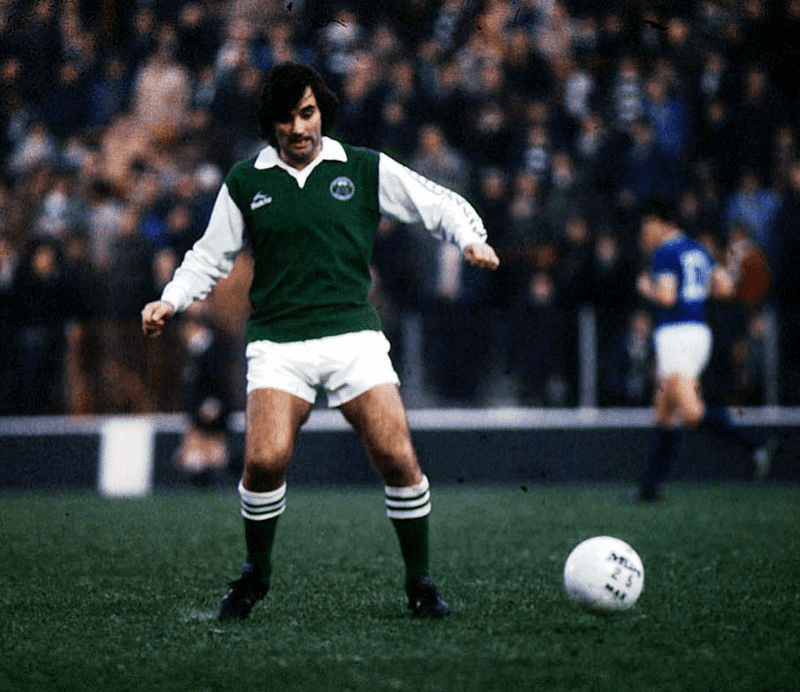
Thus, Hibernian Football Club can be seen as a prime example of how unstable things can be in football. A successful day can be followed by a dramatic change in fortune tomorrow. But this does not mean it should be seen as a tragedy. Problems and failures are a true test of endurance, and in the world of elite sport, endurance is an essential component on the path to claiming a coveted victory.