
There’s an opinion that not everyone can write a truly remarkable literary work.
Iedinburgh tells you more.
The fact that some modern authors demonstrate a different point of view doesn’t contradict this. After all, experience shows that short-lived books are quickly forgotten, while stories fortunate enough to become classics are enjoyed by generations of readers.
But for a book to gain widespread acclaim, the author must put their heart and soul into it.
This is especially true when writing for children. Young readers are very perceptive and cannot be fooled. Therefore, authors must truly apply all their talent and abilities when creating children’s literature.
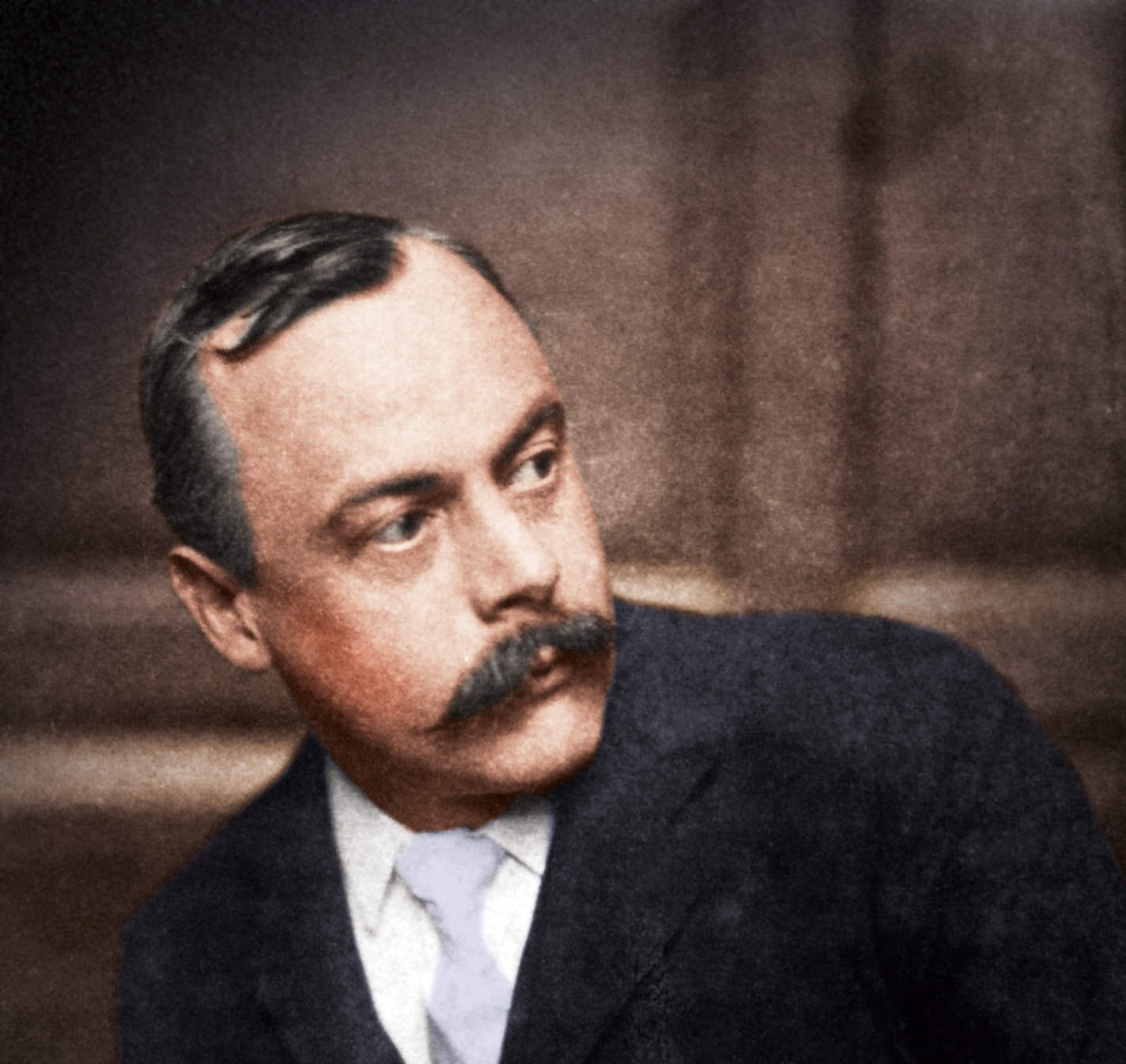
Kenneth Grahame is a writer who became world-famous thanks to his book The Wind in the Willows. He wrote this tale in 1908, largely inspired by his own son.
Although many publishers initially refused to publish it, the book later became beloved and widely known—and, naturally, its author gained great recognition as well.
To learn more, get comfortable and begin your journey of discovering Kenneth Grahame and his extraordinary literary career.
Childhood
Kenneth was born on March 8, 1859, in Edinburgh.
In 1864, his mother died of scarlet fever. His father suffered severely from alcoholism, and shortly after his wife’s death, he moved to France, leaving his children to be raised by relatives.
Young Kenneth ended up living with his grandmother, who took care of his upbringing.
School Years and Unfulfilled Hopes
As a schoolboy, Grahame demonstrated considerable academic ability, leading many to predict a successful future for him at Oxford University. Unfortunately, this dream did not come true. The reason was that Kenneth’s uncle considered tuition at Oxford far too expensive, and therefore, refused to allow his nephew to enroll.
With no other option, the young man started working at a bank.
Beginning His Literary Path
Kenneth’s literary journey began around 1880, when he became fascinated by essay writing.
Some of these essays were later published in the 1893 book Pagan Papers.
Readers could also find his writing in the National Observer, where he mostly shared memories from his childhood. These works later formed the basis of two full collections.
One of these collections was titled Dream Days, and notably included the story “The Reluctant Dragon.” Interestingly, this story inspired a popular animated film released in 1941 under the same title.
“Every Cloud Has a Silver Lining…”
In the summer of 1899, the writer married a woman named Elspeth. Unfortunately, the marriage did not bring much happiness.
The couple had a son who was frail, sickly, and blind in one eye. Grahame began inventing stories specifically to entertain his son, and these tales eventually served as the foundation for The Wind in the Willows. Initially, Kenneth never imagined that these simple, fairy-tale stories, intended merely to amuse his child, would later become internationally celebrated.
But as we all know, everything truly great is fundamentally simple. Grahame’s case illustrates this perfectly.
Fame at Last
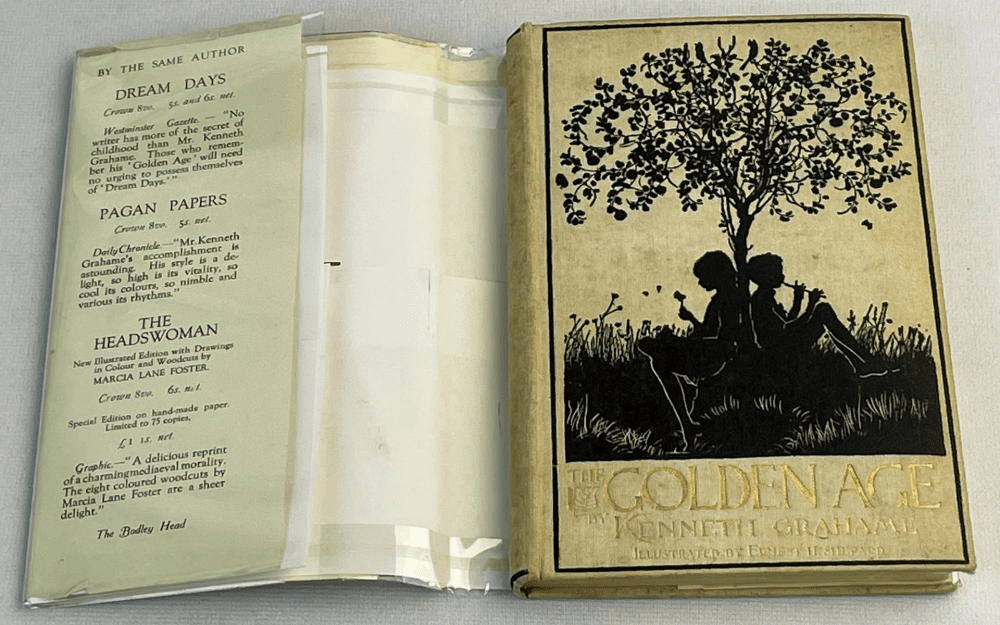
It should be noted that many publishers initially rejected The Wind in the Willows. However, in 1908, English readers finally got to see the book in print—and soon after, Kenneth Grahame became truly famous. Copies flew off the shelves, and thousands of young readers joyfully immersed themselves in this enchanting tale, vividly picturing its remarkable characters in their imaginations.
Photo: invaluable.com.