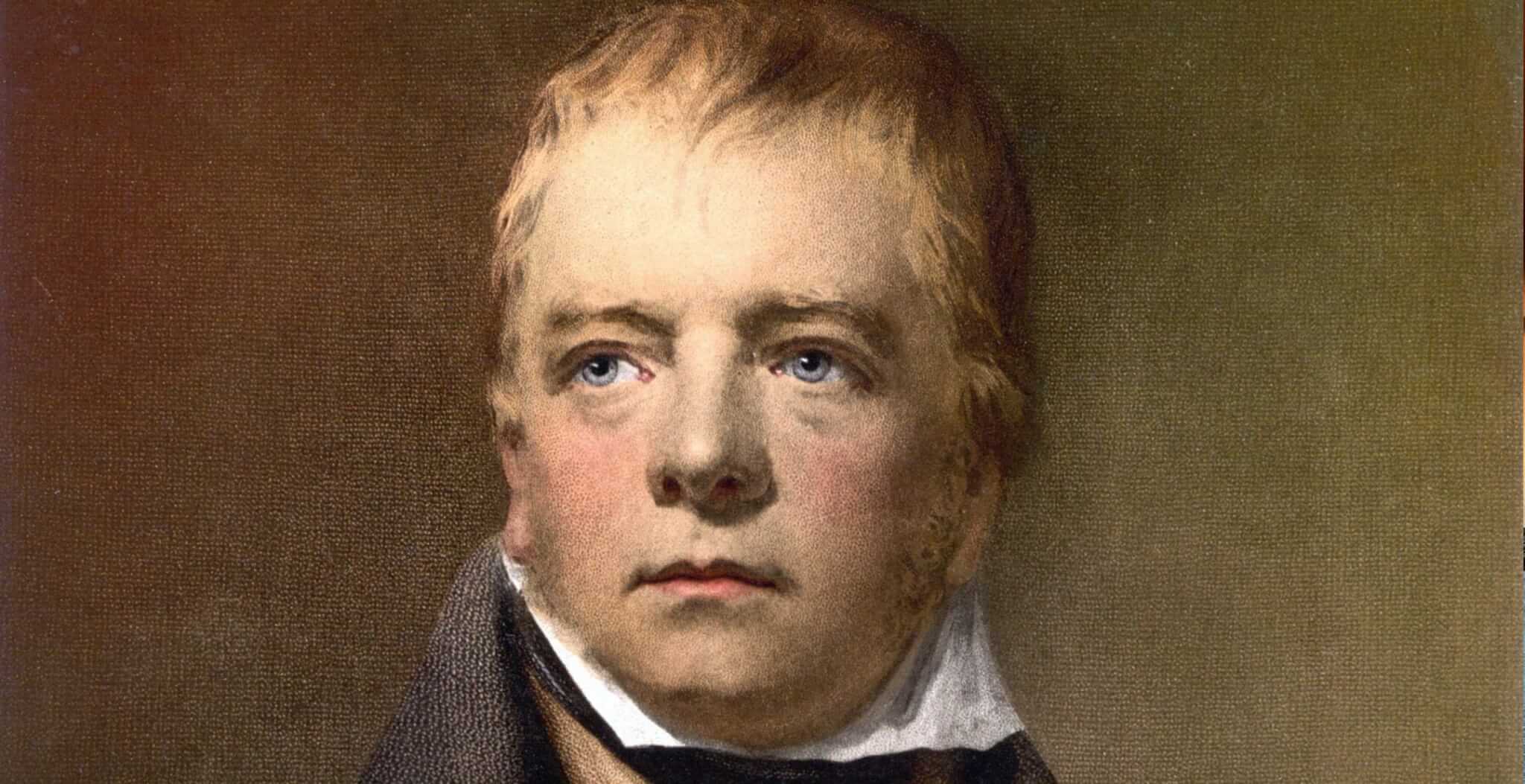

Walter Scott firmly secured his place in the history of world literature. His works, written many years ago, have never lost their relevance.
Iedinburgh tells you more.
Readers continue to enjoy exploring Scott’s literary legacy, discovering new details and valuable insights each time they do.
Interestingly, Walter Scott is credited with creating an entirely new genre: the historical novel.
Early Years
The famous writer was born on August 15, 1771, in Edinburgh. His father was a talented and wealthy lawyer, while his mother was a professor’s daughter.
Walter was the ninth child in his family. Altogether, the family had thirteen children, but only six survived.
Illness
In January 1772, young Walter fell ill. He was diagnosed with childhood polio, which paralyzed his right leg and left him with a lifelong limp.
A Clever Child
Walter spent his childhood years on his grandfather’s farm in the Scottish Borders.
Despite his physical limitation, he amazed everyone with his lively intelligence and phenomenal memory from an early age.
Returning Home
In 1778, Scott returned to his native Edinburgh, where he started school.
In 1785, he became a student at Edinburgh College. During this period, he developed a keen interest in mountaineering, which helped him strengthen physically. It was also at this time that his peers discovered his remarkable talent as a storyteller.
A Favourite Pastime
Young Walter was an avid reader, devouring novels and poetry alike. He even founded a Poetry Society at the college.
Additionally, thanks to his study of German, he began exploring German poetry in its original language.
A Significant Year
A particularly notable year in Walter’s life was 1792, when he successfully passed his bar exam at the University of Edinburgh. This allowed him to enter the prestigious legal profession and begin practising law.
However, alongside his legal career, he remained fascinated with collecting folk ballads and legends. He also greatly enjoyed translating German poetry.
Beginning His Literary Journey
Walter’s literary journey began with poetry. He initially performed his poems publicly and continued translating extensively.
Eventually, he decided to publish a collection of the ballads he’d gathered.
This led to the publication of his anthology, Minstrelsy of the Scottish Border, which featured unique original ballads and reworked legends from southern Scotland.
A Notable Achievement
However, Scott’s true breakthrough, which captivated readers, was his narrative poem Marmion.
Indeed, through his romantic poems written between 1805 and 1817, Scott became a celebrated poet. His success greatly boosted the popularity of the lyrical-epic poetic form.
Turning to Prose
Scott’s prose-writing career began with the novel Waverley; or, ‘Tis Sixty Years Since.
Remarkably, although his health was relatively weak, Walter possessed extraordinary productivity, typically publishing two novels per year.
A New Genre
At the age of 42, Scott introduced readers to his works in a completely new genre—the historical novel.
It quickly became clear that he had successfully created a universal structure for novels in this genre.
Scott pioneered the technique of placing historical figures in the background while bringing fictional characters to the forefront. These characters’ fates were shaped by the historical era itself.
Through this approach, the author aimed to demonstrate that the true driving force of history was the ordinary people. Consequently, Walter Scott’s literary exploration was primarily focused on the life of common people.
Distinctive Feature
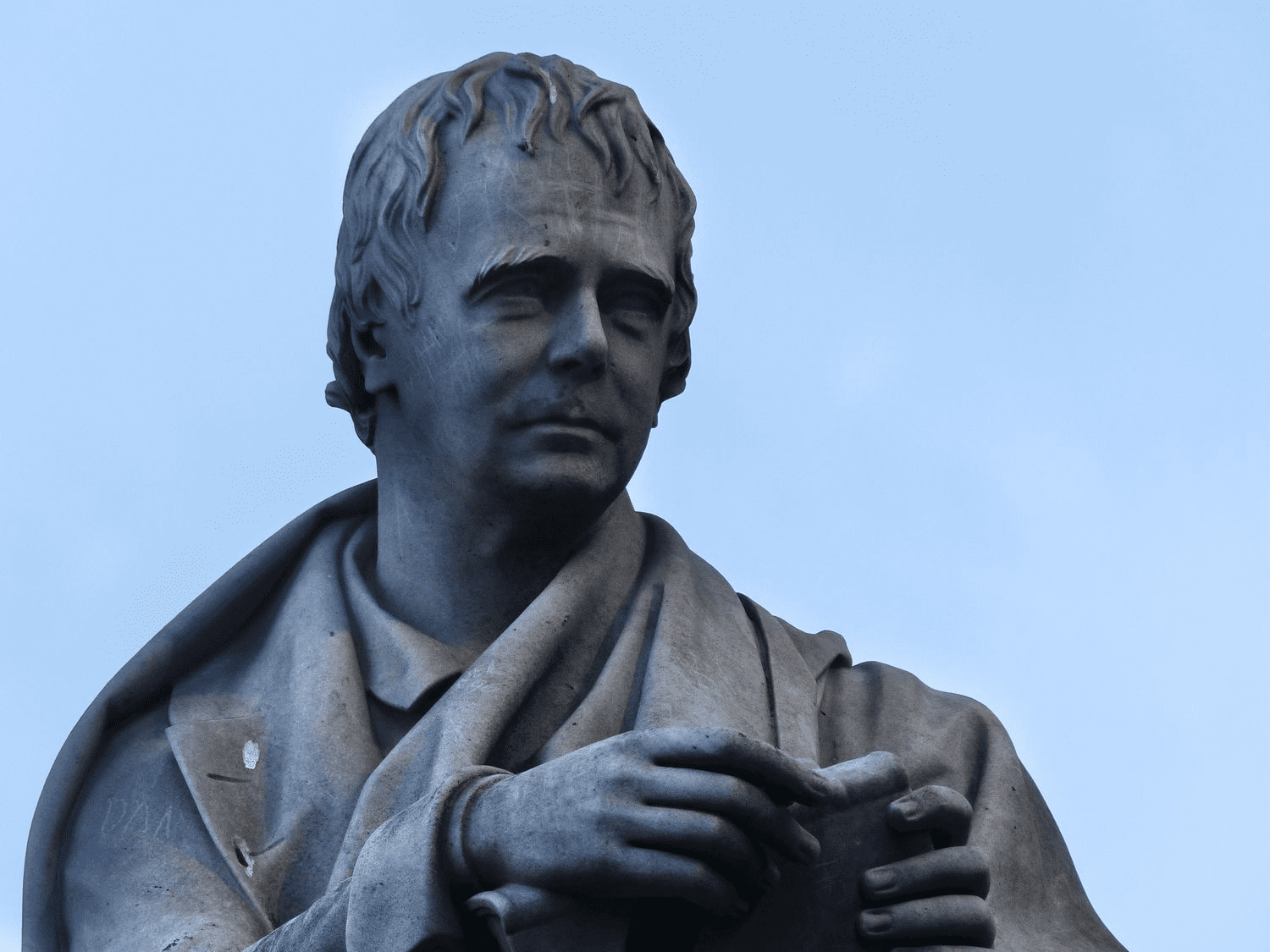
Another distinctive feature of Scott’s historical novels was his preference for linking contemporary issues with a particular historical era, illustrating how these same problems had been solved in the past.
Photos: historic-uk.com, thoughtco.com