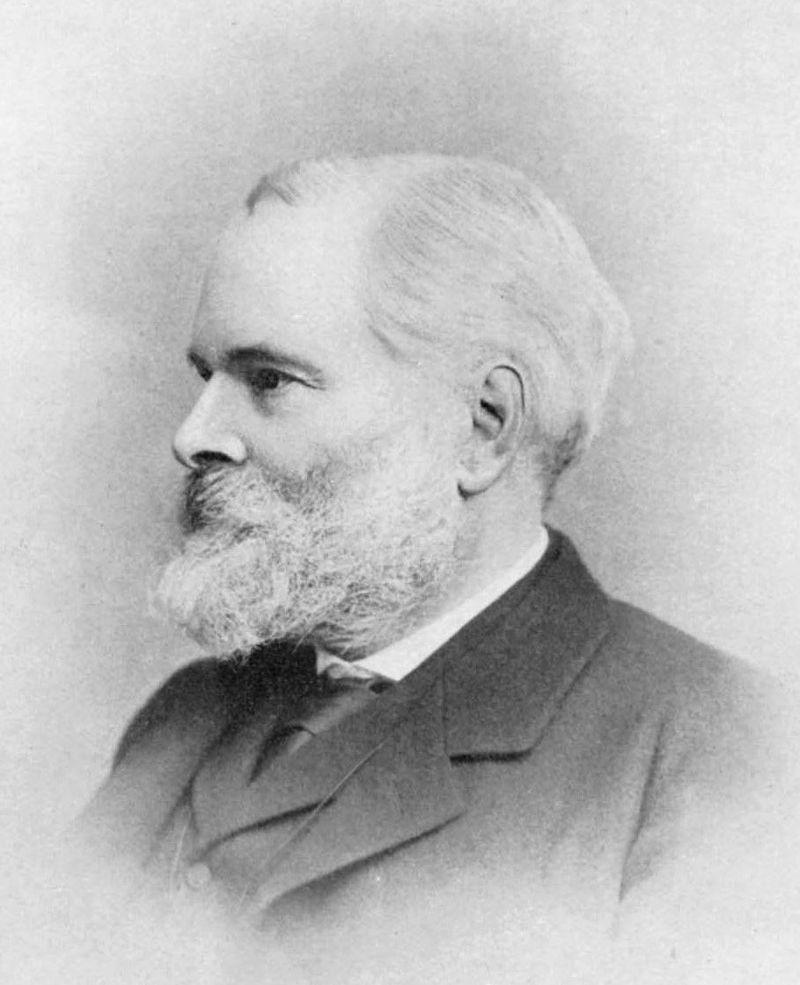

Alexander Crum Brown is known in the scientific community as a Scottish organic chemist. His achievements later became a vital component in the development of modern science, as each of Alexander’s innovations served as a kind of springboard for the further advancement of various scientific fields.
Iedinburgh.info has more.
In this article, readers can learn about the personal life and career path of one of Edinburgh’s most distinguished scientists.
Early Years
Alexander was born in Edinburgh into a family where science was combined with spiritual values. His father was a clergyman, and his maternal uncle, Walter Crum, was a renowned chemist.
As a schoolboy, Alexander attended the Royal High School and later transferred to Mill Hill School in London.
The year 1854 marked his admission to the University of Edinburgh. As an undergraduate, Alexander initially studied arts, and later, medicine.
In 1858, he obtained his Master of Arts degree.
Medical Studies
Medicine truly captivated young Alexander, leaving him with no doubt about pursuing his studies in this field. Consequently, in 1861, he was awarded the degree of Doctor of Medicine.
Interestingly, while studying in Edinburgh, the young man was also a student at the University of London. And in 1862, he became the first Doctor of Science (DSc) of that institution.
Further Studies in Chemistry
After completing his studies at the University of Edinburgh, Alexander decided to continue studying chemistry, this time in Germany.
He first became a student at Heidelberg University and then at Marburg University.
Return to Edinburgh
The year 1863 marked Alexander’s return to the University of Edinburgh, where he became a lecturer in chemistry.
And in 1869, he was appointed to the Chair of Chemistry, a position he held until his retirement in 1908.
Scientific Contributions
Speaking of Crum Brown’s contribution to science, his main development was a system for representing chemical compounds in a schematic form.
As early as 1864, he began to depict molecules by placing atomic symbols in circles and using dotted lines to connect these symbols, ensuring that the valency of each atom was satisfied.
Other Interests
In describing the biography of such a unique individual as Crum Brown, it is impossible not to mention that he never considered practising medicine. Nevertheless, this did not deter him from studying medicine in his time. It is therefore not surprising that upon embarking on his scientific career, Alexander realised that, in addition to chemistry, he was interested in pharmacology and physiology.
This subsequently led him to collaborate with the renowned physician Thomas R. Fraser. Together, they began to investigate the fundamental importance of the relationship between physiological action and chemical constitution.
The methodology of these two distinguished scientists involved performing a chemical operation on a specific substance, which would significantly alter its composition. Following this, they would investigate and compare the physiological action of the substance before and after the changes.
It should be noted that the changes under consideration involved mixing ethyl iodide with various alkaloids and comparing the resulting iodides.
An Important Discovery
In addition to Alexander’s aforementioned scientific successes, it is worth noting his discovery concerning the carbon-carbon double bond in ethylene. This subsequently became highly significant for the development of the plastics industry.
The scientist also made substantial contributions to pharmacology, and he played an equally important role in the advancement of crystallography, physiology, and mathematics.
The Banknote Innovation
The 1880s marked a period in Crum Brown’s career dedicated to studying colour combinations. He was also interested in patterns and inks. Subsequently, the results of Alexander’s research and his developments enabled the Bank of Scotland to produce banknotes that were impossible to replicate using photography.
Thus, in 1885, banknotes protected against forgery appeared.
Unfortunately, when money is involved, unscrupulous individuals with criminal intent will always emerge. This was the case with these banknotes; forgeries were discovered in 1888. After a lengthy investigation, John Hamilton Gray Mitchell was identified as the culprit. The Bank of Scotland then changed the design of its banknotes.
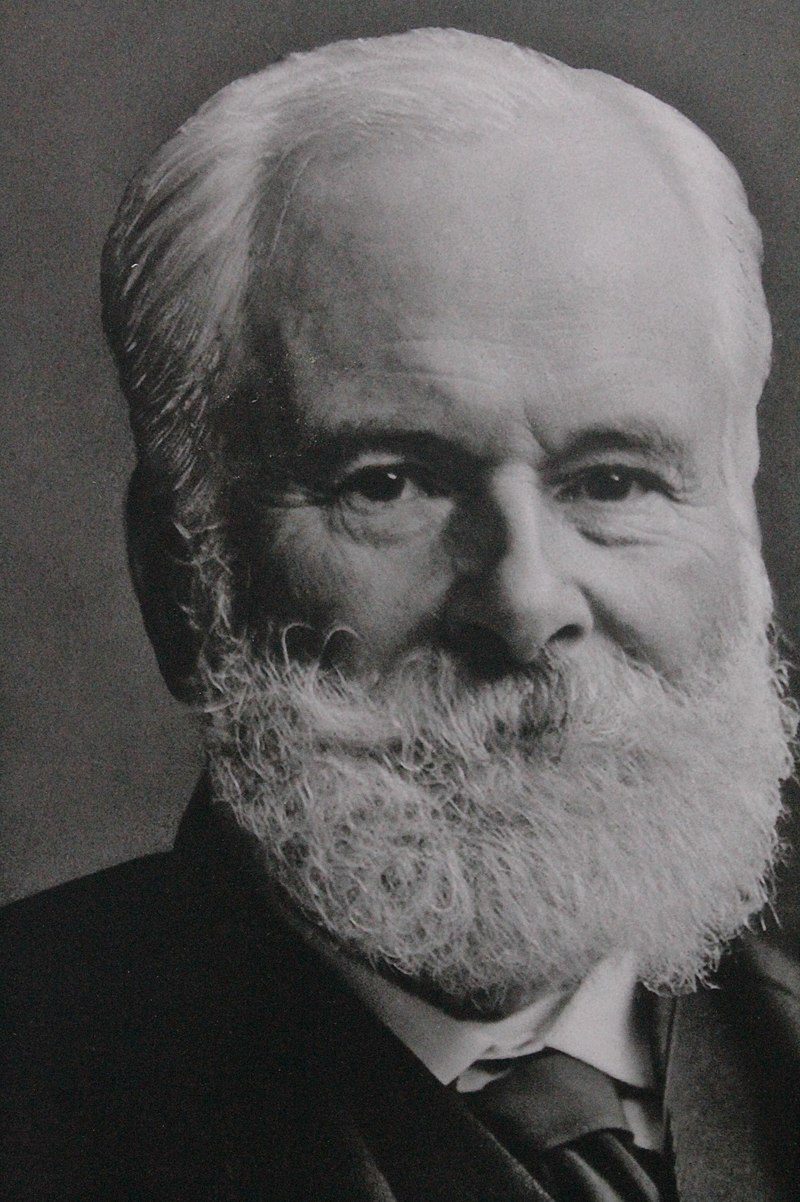
Thus, Alexander Crum Brown was a truly versatile individual. And although he went down in history as a talented organic chemist, his contributions to the development of other scientific fields were also significant. This is evidenced by the numerous achievements and research findings produced by Crum Brown, which subsequently became crucial components in the advancement of modern science.