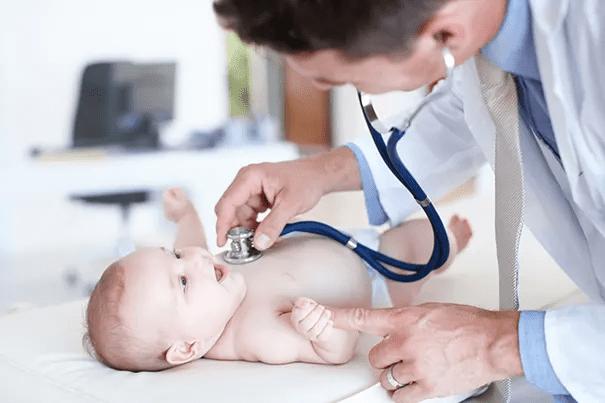

Edinburgh is a thoroughly modern city, constantly evolving and boasting a world-class healthcare system. Today, residents have a wide array of treatment options available. It’s hard to imagine, but just 200 years ago, the concept of a separate children’s hospital or clinic simply didn’t exist. This article shines a light on one of Edinburgh’s very first dedicated children’s hospitals. It’s a story not just of buildings and equipment, but of the compassionate individuals whose dedication made it all possible. More at iedinburgh.
First Steps
In the first half of the 19th century, Edinburgh, like many cities, suffered from a high child mortality rate. In 1859, this issue was highlighted by the city’s leading newspaper, The Scotsman, which published a series of letters on the subject. In response, a group of concerned citizens came together to advocate for a hospital where children could be treated separately from adults. They issued a powerful statement: “The mortality which occurs among children, and especially among the children of the poorer classes, calls for an immediate effort to be made to alleviate so much suffering and prevent so great a loss of life; and that for this purpose it is necessary to provide a suitable hospital in some healthy locality in Edinburgh.” The vision was to establish a voluntary hospital, much like the Royal Infirmary of Edinburgh, funded by philanthropy and public subscriptions.
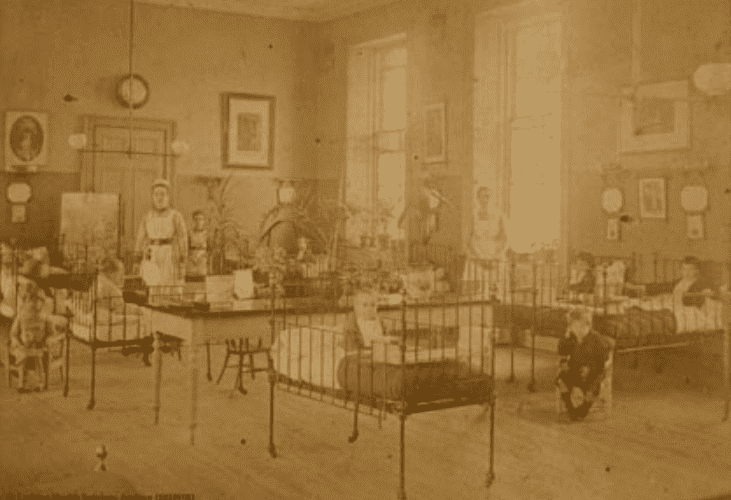
The response was both positive and swift. The organisers secured funding, recruited staff, and found a suitable property. By the end of 1859, they had leased a house at 7 Lauriston Lane. It was equipped with eight iron beds measuring five feet long and just over three feet wide, along with four smaller cots. Archives even record the hospital’s first patient: a one-and-a-half-year-old girl named Mary Sutherland. She was admitted on 15th February 1860 with what was described as ‘teething bronchitis’. Thankfully, she recovered and was discharged just three days later. These were the humble beginnings of what would become a vital Edinburgh institution, with the Royal Edinburgh Hospital for Sick Children officially opening in 1860.
Relocation and Expansion
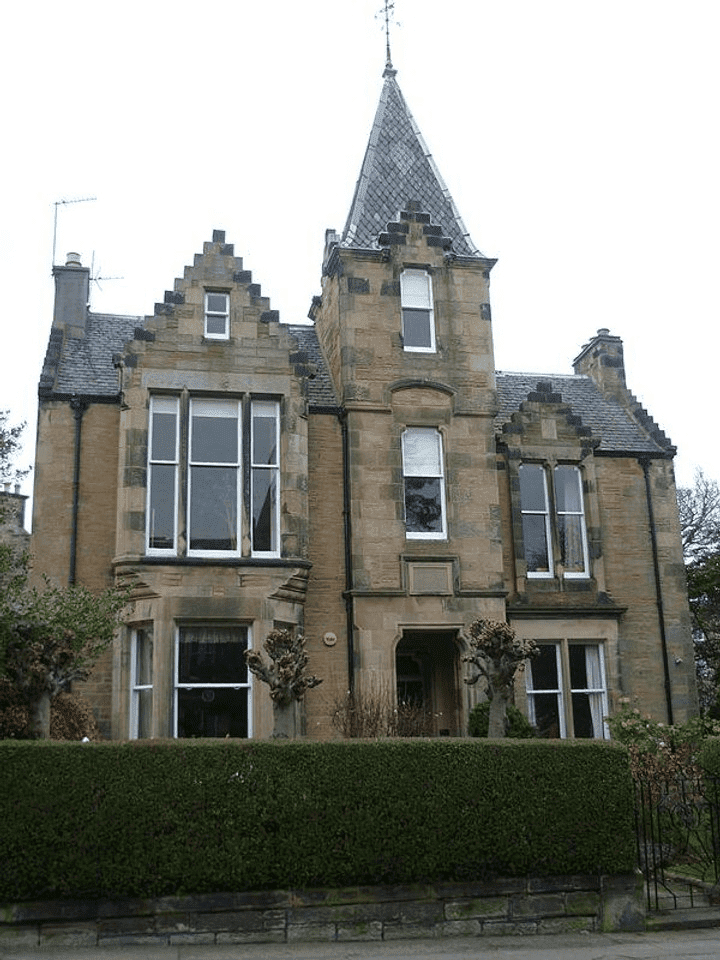
It quickly became clear that the house on Lauriston Lane was too small to meet the demand. The organisers began planning to acquire a larger building that could accommodate more beds and a separate ward for fever cases. In 1861, they established a building fund and launched a major fundraising campaign. They devised all sorts of methods, including a five-day bazaar run by a ladies’ committee, charity balls, and appeals by famous authors. Their efforts paid off, and Meadowside House was purchased for £5,500. It was officially opened in 1863 under the patronage of Queen Victoria, now bearing the name the Royal Edinburgh Hospital for Sick Children. The spacious new building housed 40 beds and a dedicated fever ward. By 1870, a new wing was added, providing another 30 beds.
As demand continued to grow, another move became necessary. Following a typhoid fever outbreak that affected staff and tragically led to the death of one nurse, all patients were temporarily relocated to Plewlands House in Morningside in 1890 while a new, permanent home was sought. By this time, the hospital had a vast network of supporters across Scotland, with annual subscriptions reaching between £7,000 and £8,000. Thanks to ongoing fundraising and the generosity of the public, a large sum was raised to construct a purpose-built children’s hospital on Sciennes Road, which was opened by Princess Beatrice in 1895.
Improvements and Achievements

The Royal Edinburgh Hospital for Sick Children consistently expanded its services. In 1887, a surgical department was established, largely thanks to the efforts of surgeon Dr Joseph Bell. He served the hospital with dedication until his retirement, helping hundreds, if not thousands, of children who, in those days, were frequently involved in accidents with carts and trams.
In 1897, just two years after the discovery of X-rays, the hospital introduced a medical electricity department. A dedicated children’s Ear, Nose, and Throat (ENT) department followed in 1913, the first and only one of its kind in the UK at the time. The hospital always strove for improvement, developing new methods and approaches to child healthcare. Throughout its history, it worked closely with the University of Edinburgh to advance the field of paediatrics and train students. After joining the National Health Service, the hospital continued to innovate:
- A new operating theatre was built for ENT procedures.
- A psychiatric medicine department was established.
- New techniques in anaesthesia and blood transfusion were pioneered.
- Highly advanced capsule endoscopy, the first of its kind in Scotland, was introduced.
The Story of Jack
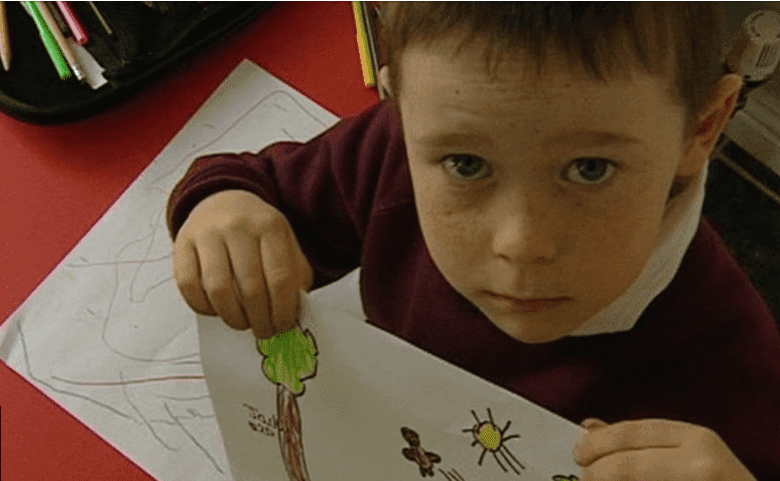
A touching story is intrinsically linked with the Royal Hospital for Sick Children – that of 6-year-old Jack Henderson. This young Edinburgh lad was so determined to help the hospital where his younger brother was a regular patient that he decided to raise money in a unique way: he would draw anything requested in exchange for a donation. Initially, Jack and his family hoped to raise £100. They never imagined that the young artist would be inundated with requests. Despite his young age, he undertook a serious mission for a good cause. The boy drew 536 pictures in 231 days, using 314 pens, 162 colouring pencils, 96 pencils, and 2,144 sheets of paper. In the end, Jack raised an incredible £64,000, donating the entire sum to the hospital’s charity fund. In an interview, Jack said he wasn’t tired at all and was “ready to draw more.” He was overjoyed that he could help his brother and other sick children.
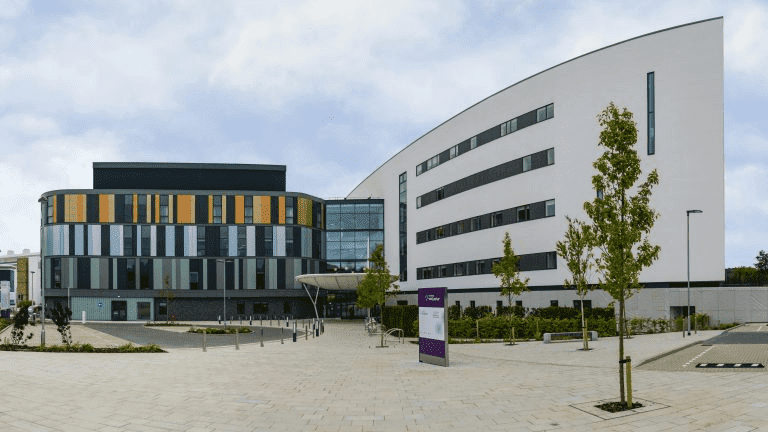
The hospital’s story of success continues. It celebrated its 150th anniversary in 2010 and, in 2021, underwent another relocation to a new, state-of-the-art building in the Little France area. It is now co-located with the Royal Infirmary of Edinburgh, giving it even greater access to the latest research and technology. The new buildings and wards are designed to ensure patients feel as comfortable as possible during their stay. It also has a slightly new name: the Royal Hospital for Children and Young People. But no matter how the buildings or the name change, the hospital’s core purpose remains the same: to help children receive excellent medical care, regardless of their family’s financial situation. Today’s leadership remains true to the goals of its founders, who were so deeply troubled by the plight of sick children in Edinburgh in the mid-19th century.