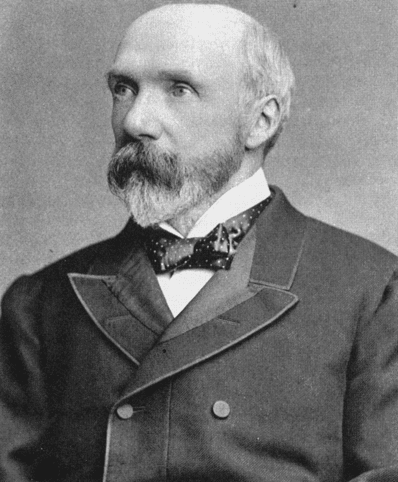

John Anderson was a celebrated anatomist and zoologist.
More at iedinburgh.info.
Interestingly, before becoming a scientist, Anderson initially attempted to pursue a career in banking. However, his growing scientific curiosity soon took over, leading him to abandon that path and return to education—eventually becoming one of Edinburgh’s most distinguished scholars.
Early Life
John’s journey began on October 4, 1833, in Edinburgh. From an early age, he showed a keen interest in the natural sciences.
As a young adult, he followed in the footsteps of his father, Thomas Anderson, and began working at the National Bank of Scotland.
However, his deep passion for science could not be ignored. Shortly after starting his banking career, John decided to leave it behind and pursue a medical degree. He enrolled at the University of Edinburgh and graduated in 1861.
A New Chapter
In 1862, John earned his Doctor of Medicine degree, having completed a dissertation in zoology.
A pivotal moment in his academic journey was his appointment as Chair of Natural History at the Free Church College in Edinburgh. Over two years, he conducted extensive studies on marine life, carrying out dredging operations along the Scottish coast.
A Defining Year
The year 1864 marked a turning point for Anderson, as he relocated to India. There, he assumed the role of the first curator of the Indian Museum in Calcutta.
Scientific Expeditions
In Calcutta, Anderson was responsible for cataloguing mammal specimens and archaeological collections. He was later promoted to Superintendent of the museum.
His career was greatly enriched by several scientific expeditions.
In China and Burma, he conducted remarkable specimen-collecting journeys. In 1867, he had the honour of accompanying Colonel Edward Bosc Sladen on an expedition to Yunnan and Upper Burma.
This journey allowed Anderson to make a detailed comparison between the Irrawaddy dolphin (Orcaella brevirostris), Orcaella fluminalis, and the Ganges river dolphin (Platanista gangetica).
Further travels followed in 1875–76 under Colonel Horace Browne. However, the expedition was cut short after British consulate officer Augustus Raymond Margary was killed.
Anderson’s third major expedition took place in 1881–82, this time to the Mergui Archipelago.
The expedition proved exceptionally fruitful, yielding numerous valuable artefacts. Anderson later conducted comparative research on the birds, reptiles, and mammals collected from the archipelago.
He also returned with rare plant specimens that were later added to the collections of museums in Calcutta and London.
Another Journey
In 1884, Anderson travelled to Japan. One of the highlights of this visit was the extensive collection of Ainu artefacts he assembled. These were later gifted to the British Museum and the National Museum of Scotland.
Retirement from Service
In 1886, after years of dedicated work, Anderson retired from his post in India. However, his scientific pursuits didn’t end there. He remained an avid collector and continued making notable contributions.
After leaving India, he focused on building extensive zoological collections in Egypt. These would later form the foundation of his major publication, Zoology of Egypt.
John Anderson passed away on August 15, 1900, in Buxton, England. He was laid to rest at Dean Cemetery in Edinburgh.
His grave is marked by a sculpted portrait, crafted by David Watson Stevenson, commemorating a man whose life’s work enriched the world of science and whose legacy lives on.