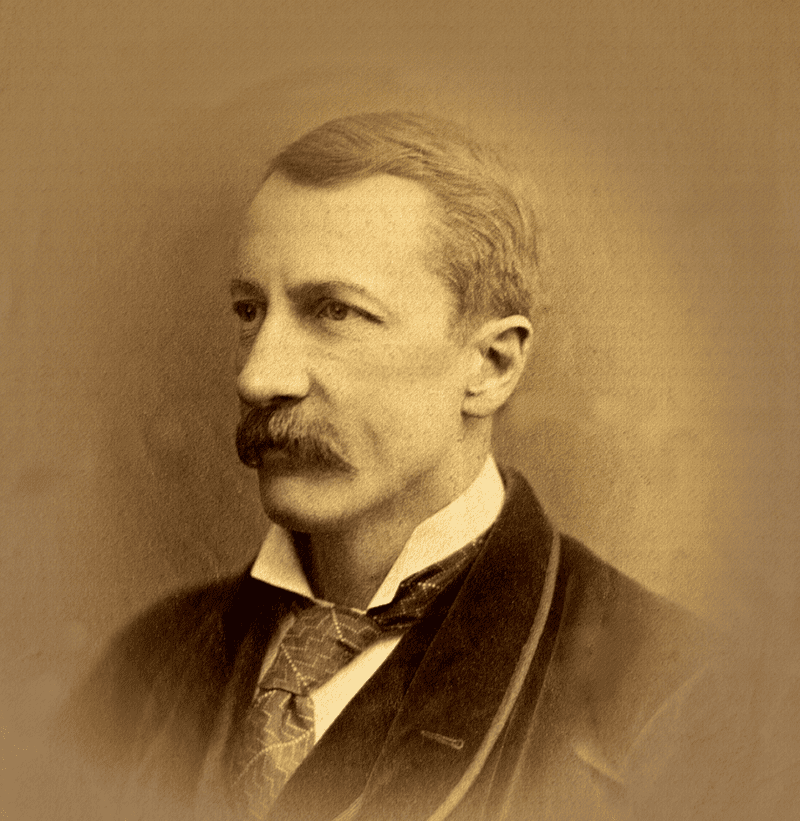

George Forbes is known in the scientific community as a Scottish electrical engineer, astronomer, and researcher.
Iedinburgh.info has more.
George’s range of scientific interests was so extensive that his achievements were genuinely astonishing in their multifaceted nature. Yet, despite his success and remarkable contributions to science, the twilight of his life was deeply unfortunate. But let’s cover events in chronological order.
Early Years
The future scientist was born on 5 April 1849 in Edinburgh.
George initially received his education at the Edinburgh Academy. He later became a student at the University of St Andrews.
Lecturer
In 1873, George was appointed a professor at Anderson’s University in Glasgow. He devoted nearly all his lectures to advocating the necessity and feasibility of using electricity for transport. At that stage, however, he did not attempt to implement this idea practically, as his primary focus was research into the speed of light.
A Crucial Phase
Later, a significant and highly responsible phase in George’s career commenced.
This refers to the period when he served as consulting engineer for the Niagara Falls hydroelectric power scheme. Forbes held this post from 1891 to 1895.
However, in addition to this, he also managed to consult on other projects in New Zealand, Egypt, India, and South Africa.
The Move to London
Stepping back a little, it should be noted that 1880 was the year George left Anderson’s University. He had decided to move to London, and for the next two decades, the scientist focused on electrical power engineering.
For instance, he detailed the process for the electrical supply of the City and South London Railway. Interestingly, the London Underground later implemented Forbes’s recommendation.
Furthermore, thanks to the scientist’s valuable developments in electrical power engineering, he was invited in 1881 to be a jury member at the Paris International Exposition of Electricity. Forbes was later admitted to the French Legion of Honour.
Travels and Astronomy
When discussing the eminent scientist’s life, it’s crucial to note that his scientific interests extended beyond electrical engineering to also encompass astronomy.
For example, in 1874, during a major expedition to the Sandwich Islands (an older name for Hawaii), George served as the chief astronomer at the Hawaiian observation post.
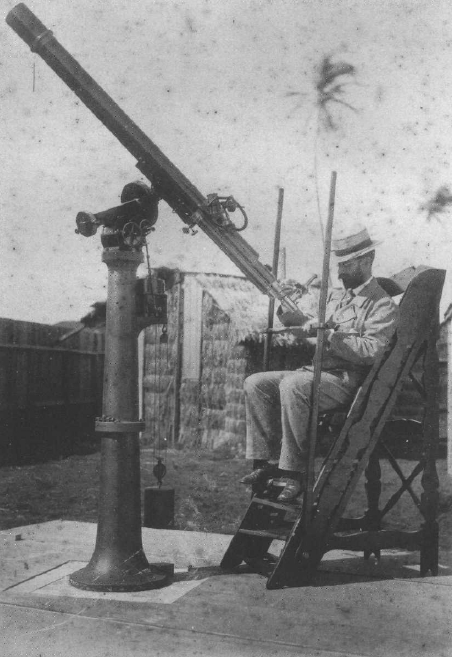
Forbes returned to his homeland via Peking (now Beijing) and St Petersburg. He also managed to cross the Gobi Desert and Siberia.
Interestingly, the contacts made during such extensive travels later enabled Forbes to gain renown as a British war correspondent writing for The Times.
Achievements in a New Field
In terms of his astronomical achievements, George not only lectured but also made significant discoveries.
Specifically, he managed to predict the existence of a trans-Neptunian planet fifty years before Pluto was discovered.
And in 1880, Forbes first spoke of trans-Neptunian planets that bore similarities to a hypothetical ninth planet in the outer Solar System.
Incredible Success
While engaged in astronomy, Forbes did not forget his primary field of scientific interest – electrical power engineering.
Thus, in 1882, he secured the position of manager at the British Electric Light Company. This company produced carbon filaments and arc lamps. While in this role, Forbes experimented with using carbon for brushes in electric motors, an innovation that allowed for the replacement of earlier wire and gauze brushes.
After numerous attempts and trials, in 1885 the scientist was able to obtain a patent for an “Improved Means for Establishing Electric Connection between Surfaces in Relative Motion Applicable to the Collectors of Dynamo Machines”.
This achievement effectively championed the use of carbon as a current collector for rotating electrical machinery.
The invention proved so successful that variations are still fundamental to electricity generation today.
Later, the world was surprised by the news that Forbes had sold his patent rights to this invention. The puzzling aspect was that the patent could have secured the scientist a comfortable future and made him a very wealthy man. But George himself decided otherwise.
Success in Military Affairs
As it turned out, in addition to electrical engineering and astronomy, Forbes also managed to make a significant mark in military affairs.
For instance, at the turn of the century, he took up the study of artillery technology.
Between 1903 and 1906, he even worked at the Admiralty, during which time he developed a rangefinder. This device proved highly successful and was still in use by the Royal Navy when the Second World War began.
And with the advent of the First World War, Forbes developed signalling methods for submarines.
A Sad End
The final years of the talented scientist and inventor’s life were filled with disappointment that his success had not brought him wealth or fame. Consequently, Forbes had to live out his old age in outright poverty.
George’s death occurred as a result of an accident. This happened on 22 October 1936.