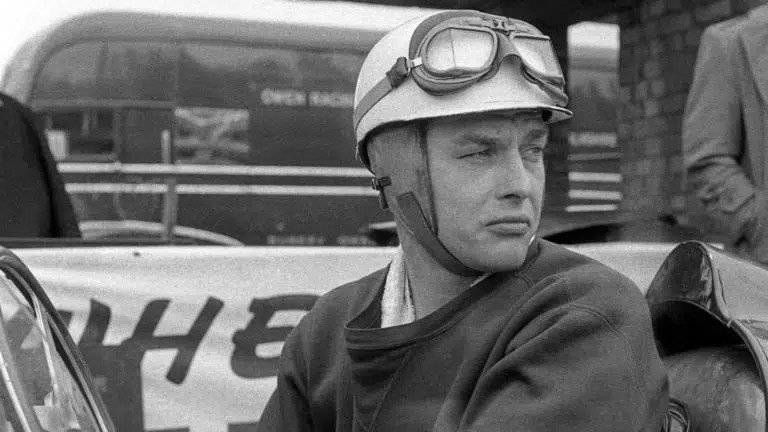

Edinburgh can be called a city of talented individuals, all of whom have successfully realised, and continue to realise, their potential in various fields – science, culture, industry. Sport is no exception in this regard. Consequently, the world knows of many Edinburgh athletes who have reached great heights. More at iedinburgh.
Ron Flockhart is a worthy representative of Edinburgh’s sporting sector. As a racing driver, he was unafraid to challenge fate and his own professional capabilities. Perhaps this very trait allowed him to achieve the success he desired. Yet, at the same time, such dedication ultimately cost the sportsman his life.
Early Stages
The future racing driver was born on 16 June 1923. Ron studied engineering at the University of Edinburgh. During the Second World War, he also served in The Corps of Royal Electrical and Mechanical Engineers (REME).
And it seemed nothing foretold that this young man would later tie his life to constant risk, speed, and adrenaline.
Beginning of a Professional Path
It should be noted that Ron’s love for racing began to develop when he became fascinated with motorcycles, which happened while he was in the army.
Cars burst into his life in 1948. He first drove a modified MG and later tested his skills in 500cc Formula 3 with a Cooper.
Then came participation in hill climbs, Formula Libre in 1952, as well as competitions at Goodwood Circuit, Charterhall, and Snetterton Circuit. Ron managed to excel everywhere. Thus, his motorsport career began quite successfully. This subsequently prompted the young man to leave the Edinburgh textile company where he worked at the time and dedicate himself entirely to professional sport.
A Lucrative Contract
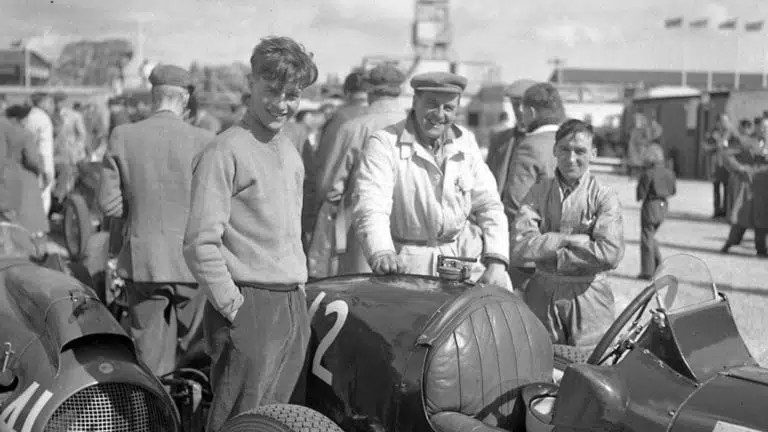
Ron’s successes also caught the attention of British Racing Motors (BRM), which offered him a rather lucrative contract in 1954. After this, racing the V16, the sportsman won events at Snetterton Circuit and Ibsley. Additionally, in 1954, Flockhart made his debut at the British Grand Prix.
Other Races
The following year, 1955, was not very successful for Ron. His best results were second places in Formula Libre races at Snetterton Circuit and Castle Combe Circuit. The sportsman also secured second and fourth places while driving an Austin Healey 100 at Charterhall.
Triumph
The year 1956 was memorable in Ron’s career for a ‘bronze’ at the British Grand Prix (despite his engine failing during the race) and at the Italian Grand Prix.
However, these results were far from the sportsman’s only achievements in 1956.
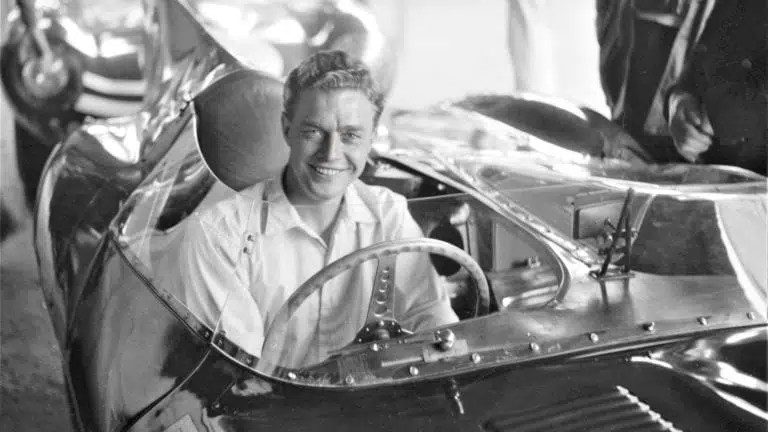
In fact, Flockhart was also invited to race for the Ecurie Ecosse team. Motorsport fans may have already guessed that this refers to Ron’s greatest triumphs: winning The 24 Hours of Le Mans in both 1956 and 1957.
Injuries Are Inevitable
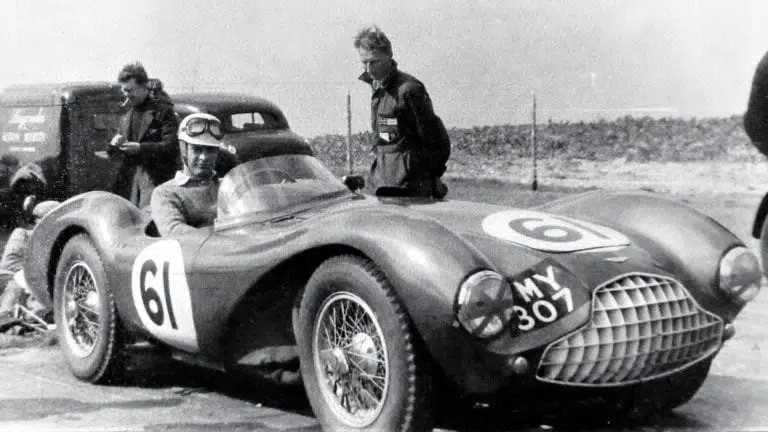
In 1958, Ron participated in new saloon car races, where he secured second place at Aintree Motor Racing Circuit and in The International Trophy event.
Additionally, Flockhart, driving a Jaguar D-Type, won a race held at Goodwood Circuit. He also took second place in a race at Charterhall, despite retiring from Le Mans.
Unfortunately, in 1958, Ron failed to qualify for a Formula 1 race. And during the Moroccan Grand Prix, he had to retire due to a broken camshaft.
As is often the case, a sportsman’s professional path is rarely without injury. In Ron’s life, 1958 brought fractured ribs and three broken vertebrae. This occurred during a race at Rouen-Les-Essarts when Flockhart’s car collided with an ambulance.
A Victorious Year
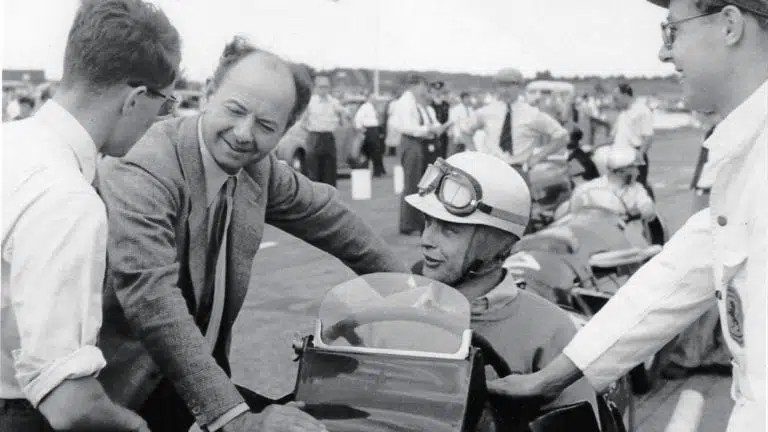
The year 1959 was truly victorious for Ron. It was then that he managed to win The Lady Wigram Trophy in New Zealand. He also finished sixth in the French Grand Prix, despite his goggles shattering during the race.
Interestingly, Flockhart successfully repeated this sixth-place result in the 1960 French Grand Prix, competing in a Lotus 18-Climax.
A New Passion
It should be noted that the next stage of Ron’s professional journey was largely associated not with motor racing, but with aviation. Flying became the sportsman’s true passion.
Naturally, given Flockhart’s character, it is not difficult to guess that flight records became his new obsession.
An Unsuccessful Attempt
Early 1961 saw Ron preparing for a flight record attempt from Australia to the UK. He was undeterred by the fact that he had only previously accumulated 12 hours of flying time in his personal Second World War P-51 Mustang.
It is important to note that the sportsman intended to fly exclusively during daylight hours and in legs of no more than 5 hours.
But, unfortunately, it did not end as successfully as hoped. Some 1,500 miles from London, the aircraft’s engine failed due to rainwater ingress. The machine later had to be written off entirely.
A Tragic End
The beginning of the 1962 season saw Ron participating in a race with a Lotus, where he finished fifth. The sportsman also took part in races in Australia, where he continued preparations for a new attempt at the Sydney-London flight record. For this, he had even acquired another P-51 Mustang. Flockhart later had to fly this aircraft to Sydney for maintenance and the installation of additional fuel tanks.
Tragically, the weather was poor, and shortly after take-off, Ron was killed in an air crash.
It is fair to say that Ron Flockhart’s death was a true tragedy for both motorsport and aviation. The sportsman’s untimely demise caused great shock among the public.
Thus, Ron Flockhart stands as a true example of an incredibly talented sportsman and a multifaceted individual. The latter is confirmed not only by his passion for motorsport and aviation but also by his keen interest in Scottish history, reading, ethnology, and Highland dancing.