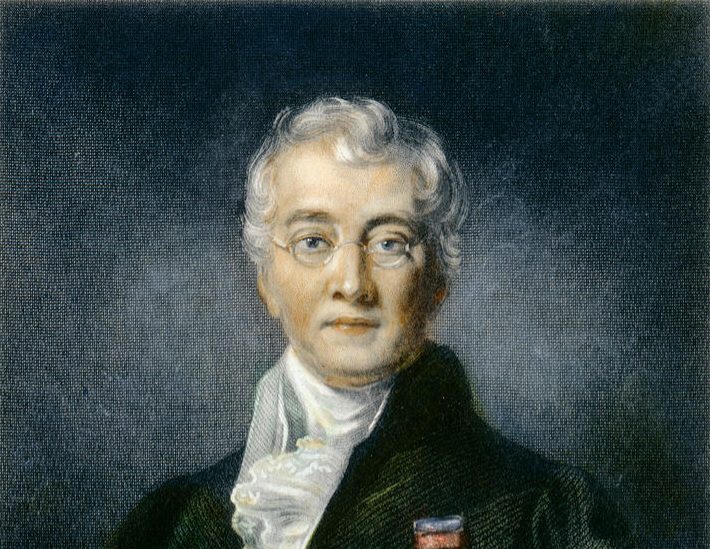

Sir Charles Bell earned fame as a renowned surgeon, physiologist, anatomist, and neurologist. He made numerous contributions to medical science, but his greatest achievement was distinguishing between the motor neurons of the spinal cord and sensory nerves.
Iedinburgh will tell you more.
Moreover, he was a physician who successfully and harmoniously blended medicine with artistic creativity. Surprised? Then hurry up and read this article.
Early Years
Bell was born in Edinburgh on November 12, 1774. His father passed away when he was only five years old, so his upbringing, personality development, and education were entirely in the hands of his mother.
Besides teaching her son to read and write, she actively encouraged his natural talents. Drawing lessons became an essential part of the boy’s childhood.
Charles spent his early years entirely in Edinburgh, attending a prestigious secondary school before enrolling at the University of Edinburgh. He chose medicine as his profession, following in the footsteps of his older brother, John.
During his studies, alongside anatomy, Bell also explored moral philosophy and pursued courses in art to perfect his artistic skills.
Beginning of His Medical Career
Bell’s medical practice began immediately after graduating from university.
He joined the Royal College of Surgeons of Edinburgh, where he lectured medical students on anatomy, while also performing surgeries at the Royal Infirmary of Edinburgh.
An Unusual Talent
Bell’s uniqueness as a surgeon lay in his fascination with the intersection of anatomy and art. He first put this talent into practice by helping his brother complete the four-volume work The Anatomy of the Human Body. Charles not only authored the third and fourth volumes but also created detailed illustrations for them.
Additionally, combining his artistic talents and clinical experience, Bell began creating wax models of the most intriguing medical cases from his practice. This soon became his favourite hobby.
Developing His Talents
Time passed, and Charles continued to advance both his medical and artistic abilities. However, circumstances eventually forced him to leave his beloved Edinburgh. The cause was a conflict between his brother John and several professors at the University of Edinburgh, one of whom was in charge of the Royal Infirmary. This conflict resulted in the brothers losing their opportunities to practice medicine at that institution.
Military Surgery
Thus, in 1805, Bell found himself in London, where he immediately began teaching anatomical and surgical courses to doctors, medical students, and artists.
A separate area of Bell’s career was military surgery. While performing surgeries, he meticulously documented the neurological injuries of soldiers. He treated and operated on the wounded soldiers from the Battle of Waterloo. Unfortunately, many of his patients died after their surgeries, leading Robert Knox, who assisted Bell during these operations, to later criticize his work harshly.
Knox believed the death rate among Bell’s patients was alarmingly high.
Gunshot Wounds
Bell was particularly interested in cases involving gunshot wounds. Thorough research on these injuries allowed him to complete a dissertation on gunshot wounds in 1814.
Anatomical School
After marrying Marion Shaw in 1811, Bell used his wife’s dowry to purchase a share of the Windmill Street School of Anatomy, founded by anatomist William Hunter. He transferred his practice there, continuing to teach medical students and conduct scientific research.
A Landmark Event
It is worth mentioning Bell’s key role in founding the medical school at Middlesex Hospital.
In 1824, Charles experienced a significant milestone in his career when he became the first professor of surgery and anatomy at the Royal College of Surgeons of England.
A New Phase
1829 brought significant changes to the Windmill Street School of Anatomy. It became part of King’s College London, where Charles accepted a professorship in physiology.
He also contributed to the establishment of the medical school at the University of London. However, due to disagreements with fellow faculty members, Bell’s time there was brief.
In subsequent years, he focused on delivering clinical lectures at Middlesex Hospital. Later, in 1835, he took up a position at the University of Edinburgh as Chair of Surgery.
By modern standards, this famous doctor’s life ended relatively early, at the age of sixty-seven.
Death came to Bell while he was travelling from Edinburgh to London. This sad event occurred in 1842.