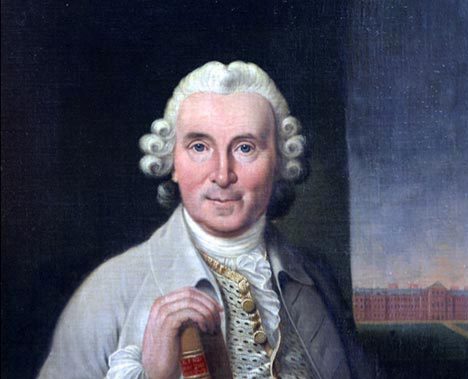

James Lind is known in Edinburgh’s medical community as a gifted physician. Iedinburgh shares more.
Throughout his career, Lind made significant contributions to naval medicine, but his most notable achievement was developing the theory that citrus fruits could cure scurvy.
Early Years
The future doctor was born in Edinburgh in 1719. After finishing secondary school, he began his medical studies under the guidance of Dr. George Langlands.
Upon completing his studies in 1739, James joined the Royal Navy as an assistant surgeon.
The Main Experiment
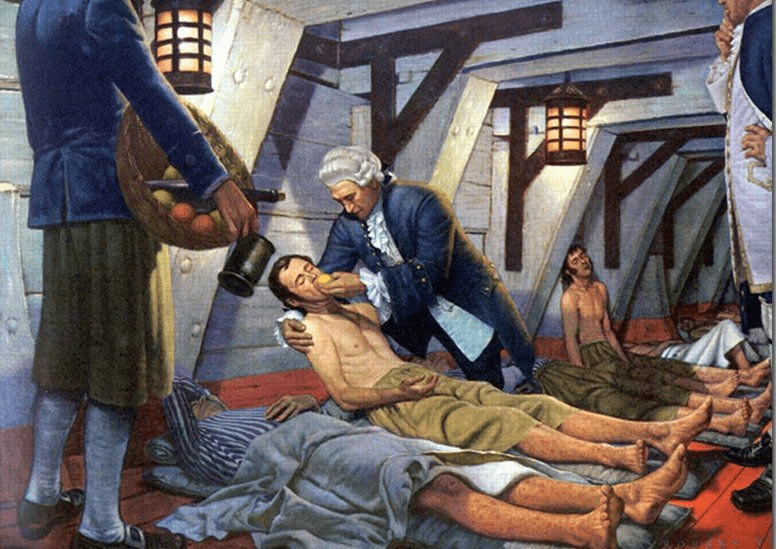
In 1747, James became the surgeon aboard the HMS Salisbury. While stationed in the Bay of Biscay, Lind conducted an important scientific experiment. Sailors suffering from scurvy were divided into six groups. Each group received identical diets but with different supplements:
- The first group was given one litre of cider daily.
- The second, 25 drops of sulphuric acid.
- The third, six spoonfuls of vinegar.
- The fourth, seawater.
- The fifth, two oranges and one lemon.
- The sixth, a spicy paste and barley water.
The sailors who ate oranges and lemons every day recovered remarkably fast.
Shortly after this experiment, James left the navy and started a private medical practice. Nevertheless, he was determined to document his findings about citrus fruits and scurvy. In 1753, Lind published his treatise on scurvy. Unfortunately, his work did not initially receive significant attention from fellow physicians.
Further Research
In 1758, Lind became the chief physician at the Royal Hospital Haslar in Hampshire.
Before Captain James Cook’s first voyage, Lind arranged for the ship to be stocked with wort, sauerkraut, and a syrup made from lemons and oranges. These products were tested for effectiveness against scurvy. However, only the results concerning wort were eventually published.
In 1762, Lind released another scientific paper dedicated to methods of preserving sailors’ health. In it, he recommended sailors consume watercress.
Yet, Lind himself, along with many colleagues, believed that scurvy resulted primarily from spoiled or poorly digested food, contaminated water, strenuous labour, and prolonged exposure to damp conditions that impeded healthy perspiration.
Therefore, although Lind acknowledged some effectiveness of citrus fruits, he did not present citrus juice as the only or best cure for scurvy. In his opinion, since scurvy could have several causes, treatment should involve multiple remedies.
Even though Lind failed to conclusively demonstrate citrus juice as the primary solution, positive results at sea convinced many surgeons and naval officers to adopt citrus fruits as treatment.
Overcoming Typhus
Another significant contribution by Lind to naval medicine concerned typhus. Lind observed that regular hygiene, changing clothes, and replacing bed linen greatly reduced the risk of contracting the disease.
As a result, he advised sailors to shave, wash, change clothes, and frequently renew bedding. The British Navy implemented these recommendations, significantly reducing cases of typhus among sailors.
The Water Problem
Lind also developed a safe and effective method of obtaining fresh water onboard ships.
Previously, ships collected rainwater using sails or gathered water from onshore sources, many of which were swampy or malaria-infested, posing serious health risks.
However, in 1759, Lind introduced a new method. He discovered that heating seawater produced steam, which, in his opinion, was equivalent in quality to fresh water. Lind further recommended using solar energy to distill water.
Thus, Lind can rightfully be considered one of the doctors who significantly advanced naval medicine. Thanks to his efforts, solutions to sailors’ most pressing problems were discovered and widely adopted by the British Navy.