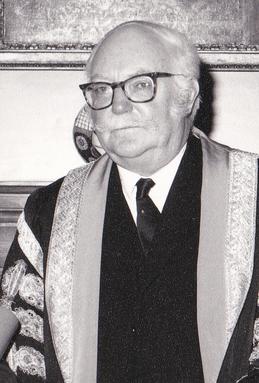

Edinburgh’s medical community has long been renowned for its exceptional talent. Many Edinburgh doctors have achieved extraordinary success, with some even gaining global recognition. And that’s because these people are genuinely passionate about what they do. Their dedication to their work drives them to achieve remarkable accomplishments and astonishing breakthroughs. More on iedinburgh.
James Alexander Ross was one of Scotland’s most distinguished surgeons. He was part of the medical team that, in 1960, carried out the very first successful kidney transplant in the United Kingdom.
Early Years
Ross was born in 1911 in Edinburgh, although his early childhood was spent in Brazil, where his father was employed.
He returned to his native Scotland at age nine, promptly enrolling at Merchiston Castle School.

After finishing his schooling, James entered the University of Edinburgh to study medicine.
It is fair to say anatomy quickly became his true passion, and he maintained this interest throughout his entire life.
By the time he graduated, Ross knew exactly what he wanted: to become a surgeon. In 1938, he became a Fellow of the Royal College of Surgeons of Edinburgh.
Subsequent Events
When the Second World War began, James volunteered in September 1939 for the Royal Army Medical Corps. He treated the wounded and was eventually posted to Egypt, where he served at a general hospital caring for casualties from significant battles.
At the beginning of 1944, Ross was redeployed, this time to the Anzio beachhead. He was subsequently awarded membership of The Most Excellent Order of the British Empire, a truly prestigious honour.
Return to Edinburgh
James was demobilized in 1945, returning to his hometown of Edinburgh. He immediately joined the University’s Anatomy Department and soon defended his thesis. In 1947, he was awarded a Doctorate for this work.
Additionally, in that same year, James took up the position of surgeon at both Leith Hospital and the Royal Infirmary of Edinburgh.
A Sensational Achievement
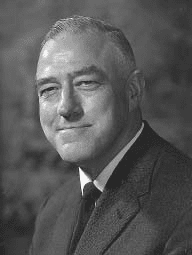
In 1957, Ross’s professional journey entered a significant new phase. That year, he joined Michael Woodruff’s surgical team. Together, in 1960, they conducted a groundbreaking kidney transplant. This operation became a sensation, as it marked the very first successful procedure of its kind in Great Britain, immediately establishing Ross’s name in medical history.
An Important Phase

In 1961, Ross received an offer he simply couldn’t refuse: to establish a new General Surgery Department at the Eastern General Hospital. He handled this task superbly.
From 1970 to 1976, this department collaborated with the Scottish army to train military surgeons. It’s fair to say this success was significantly influenced by Ross’s leadership and boundless energy.
He dedicated himself fully, ensuring that the newly created department thrived and produced remarkable results.
Books
Ross’s activities were not limited exclusively to surgical practice. Writing valuable textbooks was also part of his legacy.
Notably, together with Robert Walmsley and John Bruce, he authored the textbook Manual of Surgical Anatomy, which subsequently became highly authoritative in medical education.
In 1978, another of James’s works was published: The Edinburgh School of Surgery after Lister. It was later recognized as the best textbook on the history of Scottish medicine.
Generally speaking, every publication authored by Ross attracted considerable attention within medical circles. Even though these books weren’t aimed at wide audiences, they gained enormous respect from specialists. Ross earned a reputation as a talented author, and the outcomes of his work achieved widespread acclaim.

Thus, James Ross rightly ranks among Edinburgh’s most outstanding medical figures. This man was genuinely devoted to his profession, constantly striving to improve himself. He understood that delivering high-quality medical care is the best way to impress patients and inspire confidence in one’s professional skill.
Ross’s success can largely be attributed to his genuine passion for medicine. During his university studies, he realized he had chosen the right path. It is difficult to disagree that passion is precisely what enables significant achievements in any field. Only when someone truly loves their work can they devote their entire energy and soul to it. In such cases, burnout is rarely a problem.
James Ross is the perfect example. Work occupied a significant portion of his life, yet he always remained energetic and full of enthusiasm because, for him, medicine was not just a profession—it was his greatest passion.
As the saying goes, “Choose a job you love, and you will never have to work a day in your life.” Ross’s story and experience offer a perfect illustration of this wise and well-known principle.