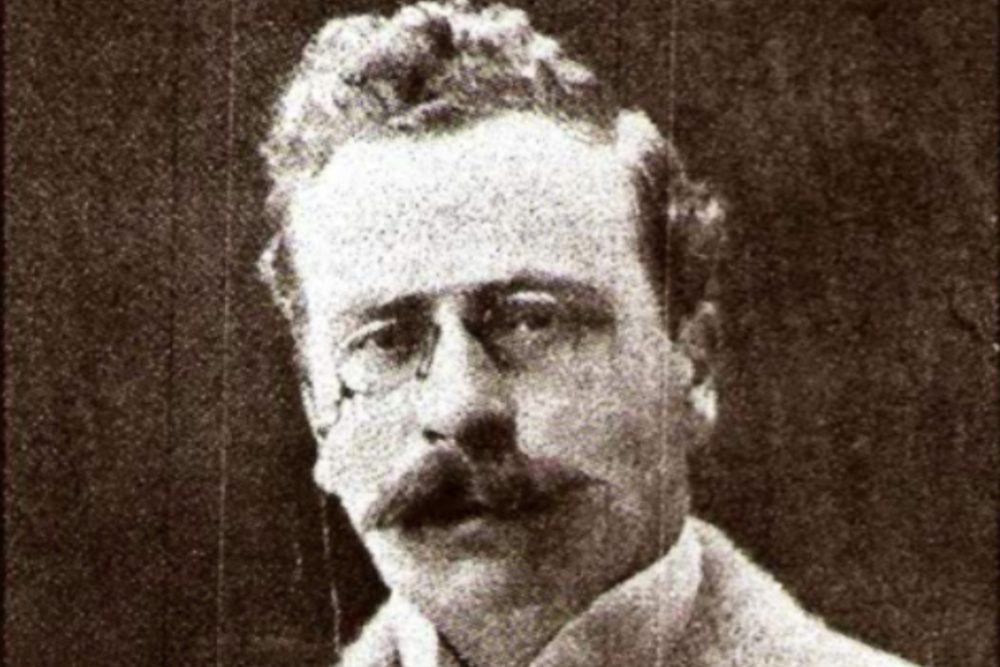

Edinburgh is celebrated not only for its striking architecture, captivating sculptures, and lush green parks—it’s also known for its people. The city’s remarkable individuals, through their talent and vision, have brought it global acclaim.
Iedinburgh explores one of those exceptional figures.
Learmont Drysdale was one such person. His musical career not only brought him notable success, but also became a heartfelt tribute to his deep love for Scotland.
Early Years
Learmont Drysdale was born on October 3, 1866, in Edinburgh.
He began his education at The Royal High School, and initially pursued architecture. However, by 1887, he grew disenchanted with the field and made a life-changing decision: he moved to London.
There, he took a position as assistant organist at All Saints’ Church in Kensington.
A Dream in the Making

Though he had begun working in music, Drysdale’s true aspiration was to become a professional composer. The first major step toward that dream was his admission to The Royal Academy of Music in London, where he studied composition and piano performance.
Early Recognition
Even during his student years, Drysdale’s talent began to shine. The Academy recognized his promise early on.
In 1891, he was awarded the Charles Lucas Medal for his piece Overture to a Comedy. The composition was met with enthusiasm by both audiences and his professors, who were immensely proud of their gifted student.
While he wrote several pieces during this period, he was primarily focused on performing as a pianist.
Signs of Genius
Among his earliest notable works was The Spirit of the Glen, performed during a student concert in 1889.
Critics at the time described it as a “promising sign” of the young composer’s future, applauding its melodic structure and inventive flair.
Other well-received works from this period included Thomas the Rhymer and The Lay of Thora, both composed during his studies at the Academy.
In 1891, he astonished audiences with the overture Tam o’ Shanter, written in just seven days. The work’s brilliance earned him a cash award from The Royal Conservatoire of Scotland.
Years later, in 1921, Tam o’ Shanter was posthumously awarded the Carnegie Award, cementing its place in the Scottish musical canon.
An Abrupt Ending
As is often the case with passionate artists, Drysdale had a fiery personality. His time at the Academy was marked by tensions with Alexander Mackenzie, the school’s director.
Eventually, in 1892, ongoing disputes led Drysdale to cut his studies short and leave the institution.
A Return to Edinburgh
Following this break, Drysdale returned to Edinburgh, where his talent was soon on display once again.
In 1894, he premiered The Kelpie, a dramatic piece that was met with enthusiastic praise from local audiences.
Two years later, in 1896, he unveiled his mystical music drama The Plague, which left a strong impression on Edinburgh’s musical scene.
Drysdale was remarkably prolific. By 1898, he had written The Red Spider, a romantic opera that further delighted his growing fan base.
A New Chapter
In 1904, Drysdale’s career took an exciting new turn when Henry Wood commissioned a piece for the London public. The result was Border Romance, a work that was met with great acclaim.
That same year, Drysdale began teaching at The Royal Conservatoire of Scotland.
He also started working with the Glasgow Select Choir, serving as conductor and composing new pieces for the ensemble, including the poignant ballad Barbara Allan.
A Distinct Branch of His Art
Another significant aspect of Drysdale’s work was his dedication to arranging traditional Scottish folk songs.
Many of these arrangements were later included in major collections, such as the 1908 Dunedin Collection of Scots Songs.
Sadly, Learmont Drysdale’s life ended far too soon. In 1909, he passed away from pneumonia at the age of 42.
His sudden death robbed the world of a gifted composer who had only begun to reveal the full scope of his genius.
But what he left behind continues to resonate. His works have become a cherished part of Scotland’s musical heritage, and their influence extends well beyond its borders.
Though his journey was brief, it was undeniably meaningful—and deeply inspiring.