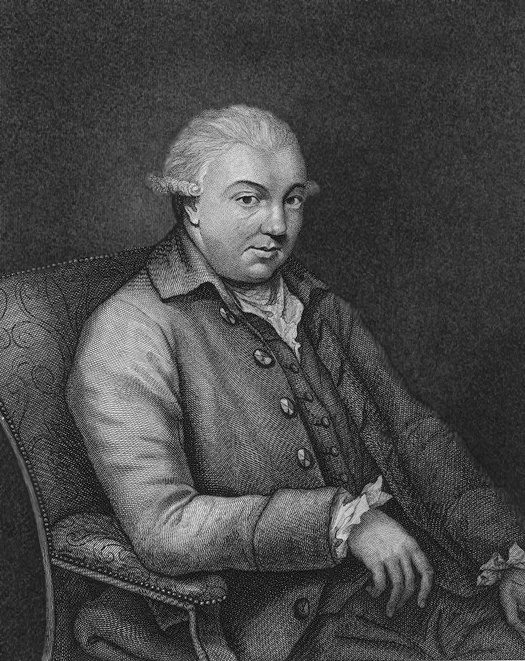

Edinburgh has rightfully earned its reputation as a “city of talents.” It has been the birthplace of many individuals who later gained international recognition, with their contributions leaving a lasting impact across a wide range of fields. More on iedinburgh.
Music, in particular, is one area where Edinburgh natives have truly been able to showcase their full potential. One such figure was Thomas Erskine, whose musical talent captivated countless hearts and, unsurprisingly, brought him widespread fame.
Early Life and Family
Thomas Erskine was born on September 1, 1732, in Edinburgh.
No account of his life would be complete without a look at his family background, which was filled with fascinating characters. His father, Alexander Erskine, was an earl who was imprisoned in Edinburgh Castle for supporting the Jacobites during the 1745 uprising. His mother was the daughter of a respected poet and physician.

Thomas began his education at The Royal High School. Around 1752, he left Edinburgh for Mannheim, Germany, to immerse himself in the study of music. By the time he returned to Scotland in 1756, following his father’s death, he had already established himself as both a composer and a virtuoso violinist.
A New Style Emerges
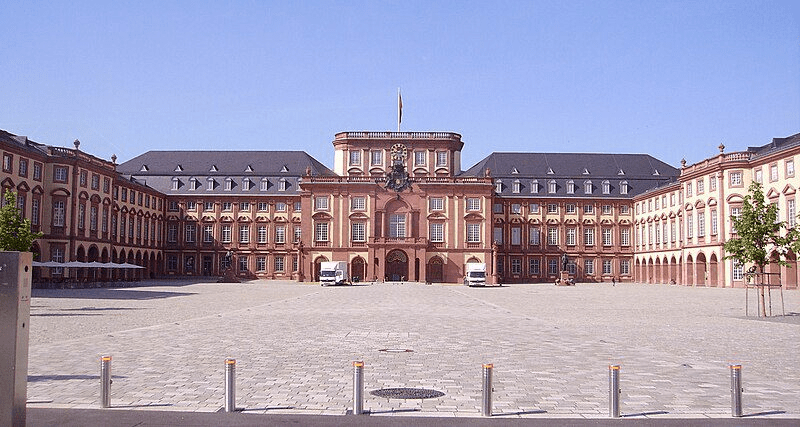
From the very start of his career, Thomas became a committed advocate of the Mannheim style, a musical movement that was gaining momentum in Europe. He would go on to become one of its most visible ambassadors in the British Isles.
Music and Freemasonry
Erskine’s big breakthrough came in 1761, when his Overtures (Symphonies) were performed publicly in Edinburgh for the first time.
Around this period, he also became deeply involved in Freemasonry. In 1760, he was appointed the fourth Grand Master of the Ancient Grand Lodge of England, based in London—a position he held for six years.
A Renaissance Man
Thomas Erskine was a man of many interests. In addition to composing, he took part in Edinburgh’s intellectual circles and was closely connected with influential figures like James Boswell.
He played a central role in the development of the Edinburgh Musical Society, and is widely considered one of the leading cultural figures in 18th-century Scotland. His impact extended beyond music—he was also a contributor to the broader Enlightenment movement.
His Works
Among Erskine’s notable compositions, the overture to The Maid of the Mill stands out. Written for a comic opera, it premiered in 1765 at the Royal Ballet and Opera.
For many years, it was believed that very few of his works had survived. That was the assumption until the 1970s. But in 1989, two previously unknown manuscripts of chamber music surfaced, sparking renewed interest in his work.
As more of his compositions were discovered, his collected works grew so large that they were eventually compiled into a full CD recording. Much of this revival was thanks to John Purser, who played a key role in bringing Erskine’s music back to public attention.
“A Life of Constant Celebration”
Unfortunately, like many creative minds, Thomas Erskine led a life marked by excess. He frequently indulged in drinking and was a familiar face at local taverns. In fact, he often composed music right on the spot, sometimes giving away new pieces for free.
This lifestyle took a toll. He eventually sought treatment at a Belgian health resort, hoping to recover. But by that point, the damage had been done.
On October 9, 1781, Thomas Erskine passed away.
Thomas Erskine lived a brilliant but turbulent life. He played a vital role in advancing Scottish music and culture, and his works continue to be appreciated by lovers of classical music today.
While his reckless lifestyle may have led to his early demise, his artistic contributions endure, and he remains one of the symbolic cultural figures of historic Edinburgh.